Reach out to our team for expert guidance, personalised recommendations, or assistance with your order.

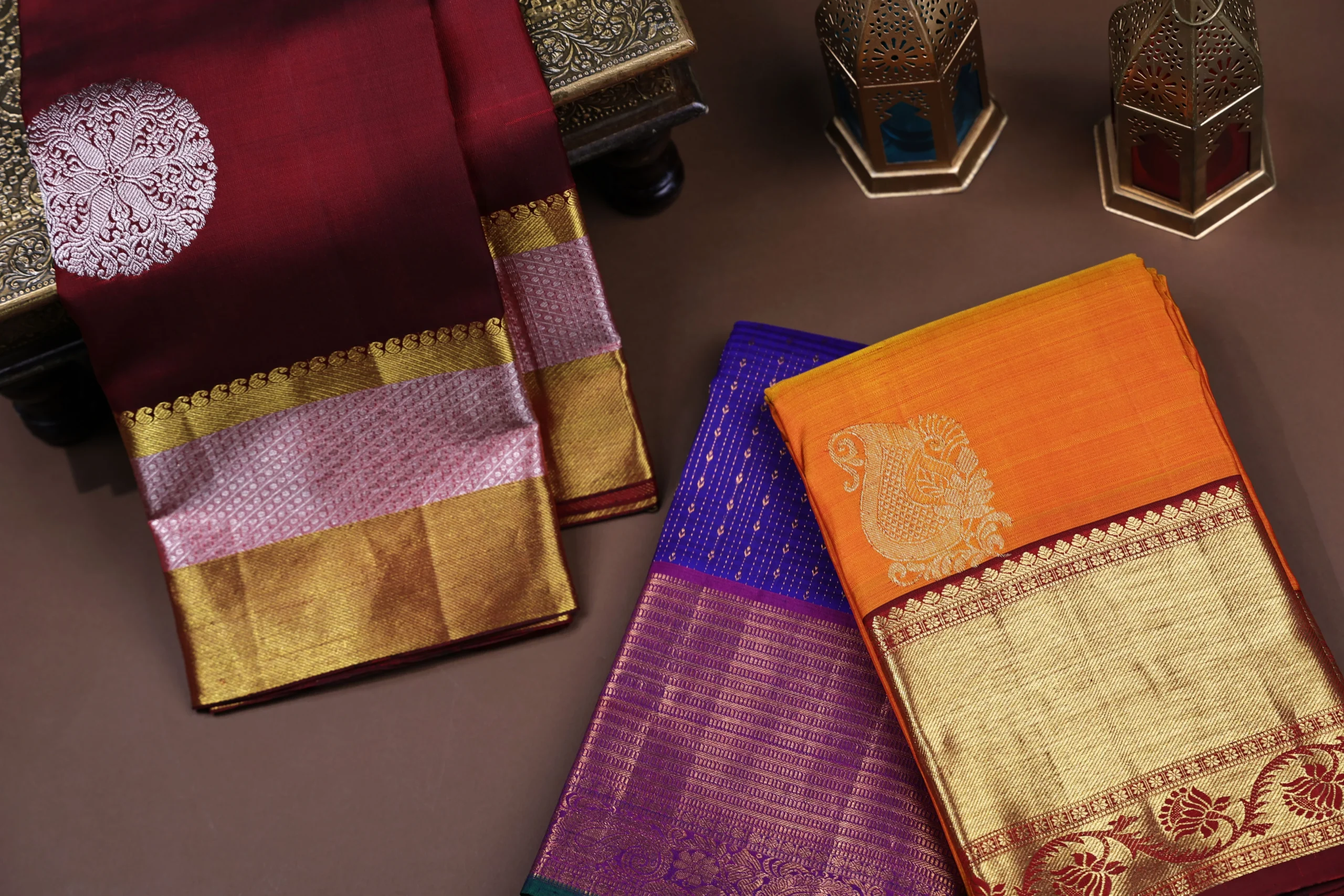
In the vibrant world of Indian textiles, few garments command as much grace and heritage as a pure silk saree. From wedding trousseaus to festive celebrations, silk sarees symbolize tradition, luxury, and timeless elegance. Whether it’s the regal charm of Kanchipuram silk saree or the delicate artistry of Banarasi silk saree, authentic silk holds a value that goes far beyond its price tag.
However, the growing demand for silk has also led to a surge in synthetic blends and imitation fabrics being sold as “pure silk.” Many customers unknowingly invest in sarees that look glossy and appealing but lack the durability, texture, and richness of genuine silk. For brides, collectors, and saree lovers, distinguishing real silk from artificial alternatives can feel overwhelming.
As someone who has worked in the fashion and textile industry for over 15 years, I’ve guided countless customers through this confusion. In this blog, I will walk you through 9 effective ways to identify authentic pure silk sarees—so you can shop confidently and invest in pieces that truly last for generations.
Always look for the official Silk Mark label issued by the Silk Mark Organisation of India. This certification ensures that the saree is made from 100% pure natural silk. It is usually attached as a tag with a unique hologram or code. Reputed sellers proudly display this mark as proof of authenticity. However, combine this with other checks for complete assurance.
Genuine silk feels soft, rich, and slightly textured when touched. It is smooth but not overly slippery or artificial. When rubbed between fingers, it produces a mild warmth due to natural fibers. Fake silk often feels extremely glossy and plastic-like. The difference becomes clearer when you compare it with real silk side by side.
Pure silk has a natural, subtle sheen that changes with lighting and angle. It reflects light in multiple tones rather than one flat shine. This gives silk its luxurious and elegant appearance. Artificial silk tends to have a uniform, overly bright gloss. If it looks too shiny under strong light, it may be synthetic.
Pure silk sarees are generally heavier due to dense natural fibers. The weave appears detailed, tight, and rich in texture. Handwoven silk may have slight irregularities, which are signs of authenticity. Machine-made sarees usually look perfectly uniform. Weight and structure often reveal the quality instantly
Pure silk is a soft, flexible natural fiber. If you pass the saree gently through a ring, authentic silk will glide smoothly through because of its fine weave. Artificial or heavily blended fabrics may feel stiff and won’t pass through as easily.
Take a small loose thread from the saree and carefully burn it. Pure silk smells like burnt hair because it is a natural protein fiber. It leaves behind soft, black powdery ash that crumbles easily. Synthetic fabrics melt quickly and smell like plastic. They form a hard bead instead of turning into ash.
Pure silk production involves natural fibers and skilled craftsmanship. Because of this, genuine silk sarees are rarely very cheap. If the price seems too good to be true, it likely is. Extremely low prices often indicate synthetic or blended fabrics. Always compare pricing with trusted sellers before purchasing.
In traditional sarees like the Kanchipuram saree, pure zari contains silver threads coated with gold. Gently scratch the zari to check the inner thread. If red or silk-colored threads appear inside, it is likely authentic. If white or plastic threads are visible, it indicates imitation zari. Real zari feels slightly heavier and richer compared to synthetic versions.
Always purchase pure silk sarees from reputed stores or trusted brands known for authenticity. Check customer reviews, ratings, and testimonials to understand the seller’s credibility. A genuine seller will clearly explain the saree’s origin, weaving process, and provide proper certifications. Transparent return policies and authenticity guarantees are strong indicators of reliability. Buying from well-established sources reduces the risk of ending up with imitation silk.
Buying a genuine pure silk saree is an investment in quality and tradition. By checking certification, texture, shine, zari, and price, you can confidently choose an authentic piece that will last for years.
True silk doesn’t just look luxurious — it feels timeless.
Reach out to our team for expert guidance, personalised recommendations, or assistance with your order.